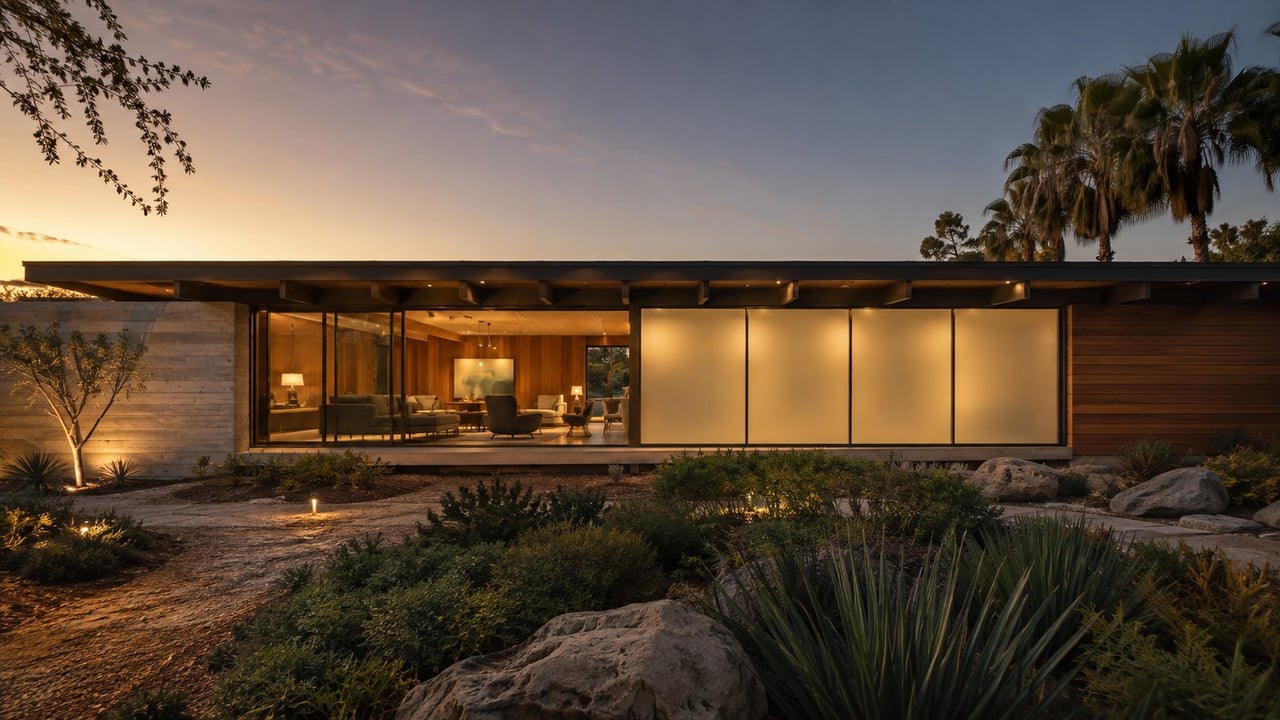
A Newport Heights listing built around "protected ocean and bay views" reads like a promise. The city even has a policy with the right name for it: Council Policy G-3, Preservation of Views. It sits on Newport Beach's own municipal website next to the tree ordinances, official-looking and specific, and it's easy to assume it functions the way a recorded easement does, locking a sightline in place the way a deed locks in ownership.
It doesn't work that way. G-3 is a claims process, not a warranty. It has to be filed, it targets a specific neighbor's vegetation, and its outcome depends on a separate, narrower tree-protection category that doesn't always bend toward the view. In a neighborhood where the bluff-top view over Mariner's Mile and the Back Bay is often the single biggest driver of price, the gap between what buyers assume and what the policy actually does is worth understanding before you price a listing or write an offer.
A Policy, Not a Property Right
Newport Beach keeps its view rules filed alongside its tree rules on the same city policy page: Council Policy G-1 (Retention or Removal of City Trees), G-3 (Preservation of Views), and G-6 (Maintenance and Planting of Parkway Trees). None of these show up as a recorded encumbrance on a title report. They're administrative policy, which means the process only starts when a property owner files a request. The city doesn't patrol the bluff proactively protecting sightlines. It responds to complaints.
If a Newport Heights seller has never filed a G-3 request, that's not evidence the view is secure. It just means nothing has been tested. A buyer who assumes the city will step in the moment a neighbor's ficus grows past the roofline is relying on a mechanism that requires someone to actively invoke it, and one whose outcome depends on a separate category of tree protection that doesn't automatically defer to the person with the view.
The View Review Runs in Both Directions
Here's the part that surprises most owners: the same permitting framework that could someday work in your favor also applies the moment anyone, including you, wants to build something taller. Nearly every parcel in Newport Beach sits inside the Coastal Zone, which means exterior construction generally requires a Coastal Development Permit separate from the standard building permit. Layered on top of that, the city's view-preservation rules require a formal view-impact analysis for second-story additions and new rooflines, a review that can add four to six weeks to an already lengthy coastal permitting timeline. A 2026 contractor guide to Newport Beach permitting is explicit that this review is not uniform citywide. It names Newport Heights specifically, alongside Corona del Mar and Balboa Island, as a sub-area with its own coastal overlay and its own version of the rules.
What that means in practice is that a bluff-top view isn't a fixed asset the city holds in trust for a homeowner. It's the current result of what every neighbor around a parcel has been permitted to build, filtered through a review process that treats a lot differently depending on which Newport Beach sub-area it sits in. Anyone planning a rooftop deck or a second story before listing, to capture more of the Back Bay rather than settle for the current sightline, should budget for that extra review window and expect the same kind of scrutiny a neighbor's addition would face if it threatened someone else's view.
Three Different Things Are Doing the Work
What actually stands behind a Newport Heights view is not one policy but three separate mechanisms, and they don't move together.
| Mechanism | Who controls it | What it actually guarantees |
|---|---|---|
| Recorded view easement or CC&R | Private, tied to specific parcels | A defined sightline, but only if one was ever formally recorded, enforced by the parties, not the city |
| Council Policy G-3 view claim | City-administered, complaint-driven | A city-mediated request that a neighbor trim or remove named vegetation, and only once you file |
| Tree protection under G-1 / Special Tree designation | City-administered | Priority given to keeping certain designated trees, which can outweigh a straightforward view complaint |
That third category is narrower than most people assume, and it has real teeth. Public remarks from the Balboa Island Preservation Association in 2021 put the number of trees carrying the city's most protective "Special Tree" designation at under 1,000, out of roughly 32,000 trees the city maintains. A tree doesn't need to be enormous or unusual to obstruct a bluff-top sightline, but if it happens to carry that designation, removing it is a different and harder conversation than a routine trim request. The city keeps a Landmark Trees Map as part of its urban forestry program, one of the few ways to check whether a specific tree near a parcel carries that status before assuming a G-3 filing would simply resolve an obstruction.
A buyer walking through a Newport Heights home with a clean line to the water is seeing the current result of all three tracks, whether or not any of them have ever been formally invoked. The preliminary title report will surface a recorded easement if one exists, but it won't tell you whether the seller has ever filed a G-3 request, and it won't tell you if the tree responsible for a future obstruction is one the city has already decided is worth protecting.
What This Means If You're Selling
Describe the view accurately, not as protected. Say what's true as of the listing date rather than implying a legal guarantee that doesn't exist absent a recorded easement. Disclose any history of tree or view disputes with neighbors, filed or informal, since a resolved or pending G-3 matter is the kind of fact a careful buyer's agent will ask about during diligence. If a second-story addition or roofline change happened during your ownership, keep the permit file and the view-impact analysis paperwork. A buyer weighing their own future addition will want to see how that review actually went, not just that it was eventually approved.
What This Means If You're Buying
- Pull the preliminary title report specifically for recorded view easements or CC&R view provisions, and read the underlying recorded document rather than the summary line.
- Ask directly whether the seller has ever filed, or been the subject of, a Council Policy G-3 request, and check the city's Landmark Trees Map for any protected trees near the parcel.
- If the view depends on a mature tree line staying at its current height, remember that outcome rests on a city complaint process rather than a right attached to the deed.
- Before planning your own addition, ask what a view-impact analysis would look like for that specific lot, since Newport Heights, Corona del Mar, and Balboa Island are each reviewed differently under the city's coastal overlays.
A Few Questions Worth Asking Directly
Does listing language calling a view "protected" carry legal weight? Not on its own. Only a recorded easement, a CC&R provision, or a completed G-3 restoration order tied to the specific parcel carries enforceable weight. Description in marketing copy is descriptive, not a warranty.
Can a new owner file a Council Policy G-3 claim right after closing? Nothing in the policy ties eligibility to how long you've owned the home. Filing and winning are different things, though, and the outcome still runs through the same case-by-case review regardless of who initiates it.
How would I know if a tree blocking, or protecting, my view is a Special Tree? The city maintains a Landmark Trees Map through its urban forestry program, which is the most direct way to check a specific tree's status before assuming a G-3 filing would resolve an obstruction one way or the other.
Bluff-top views are the reason people pay a premium to live in Newport Heights, and they're also one of the least legally settled features of a Newport Heights home. Sorting out which piece of a view is documented, which piece is procedural, and which piece is simply the current state of a neighbor's landscaping is exactly the kind of groundwork worth doing before an offer goes in or a listing goes live. At bouHAUS, that groundwork, title review, neighbor history, permit files, and an honest read on what a view actually rests on, is part of how we price and represent architecturally significant Newport Beach homes. If you're weighing a Newport Heights purchase or sale and want a clear-eyed look at what's really protecting the view, reach out and let's talk through it.