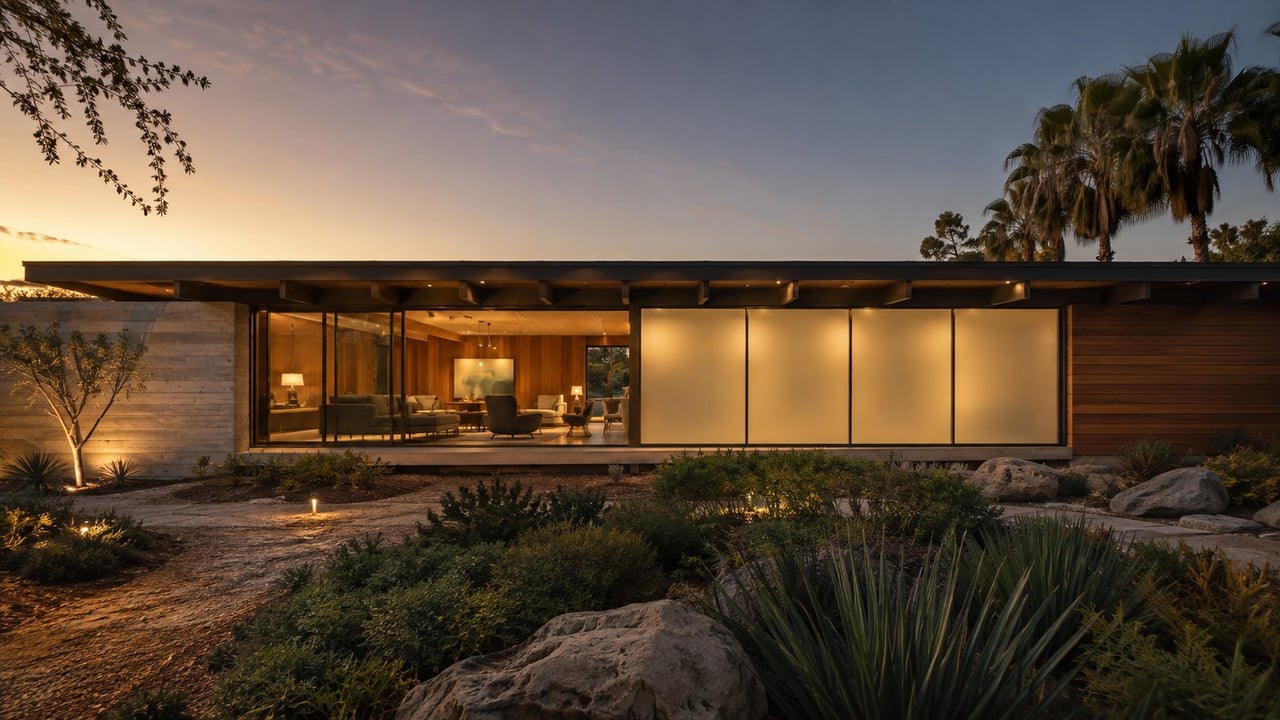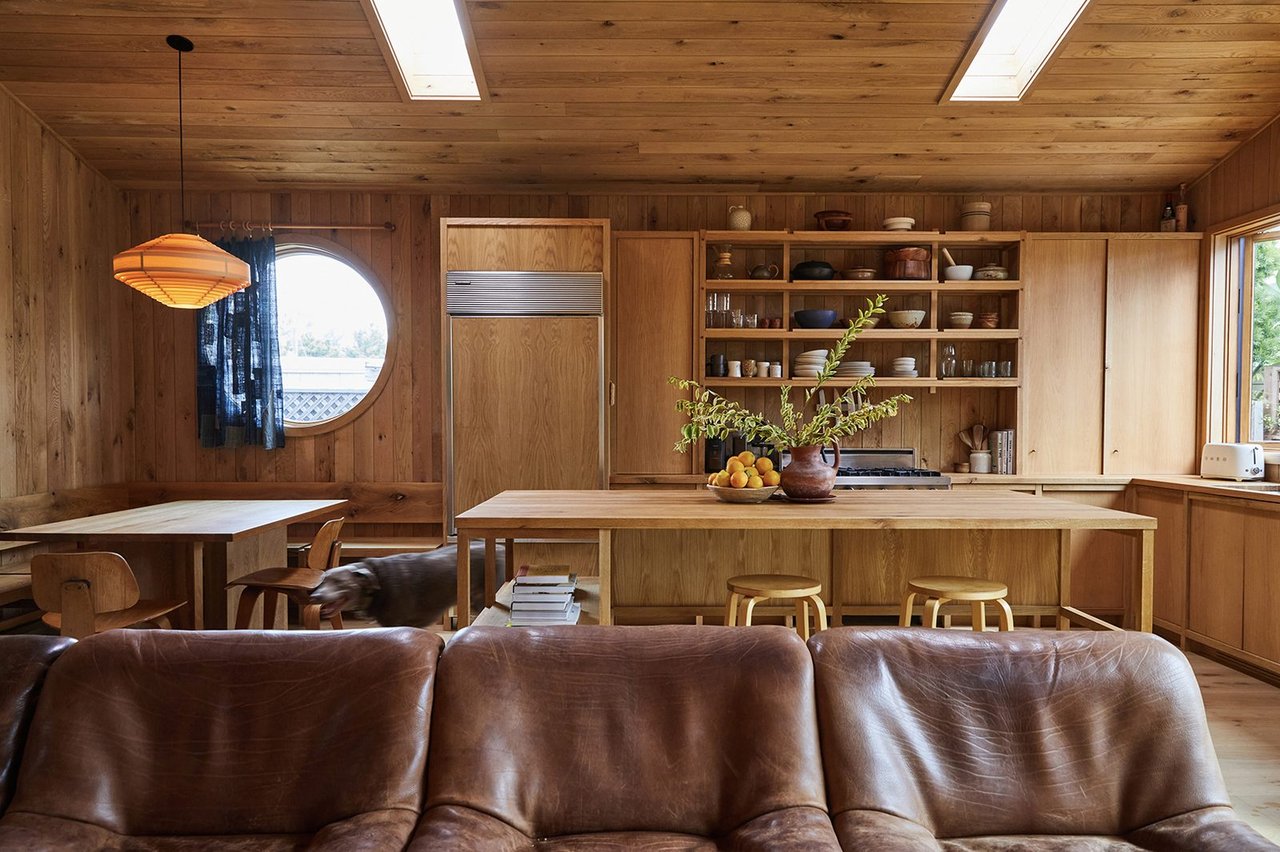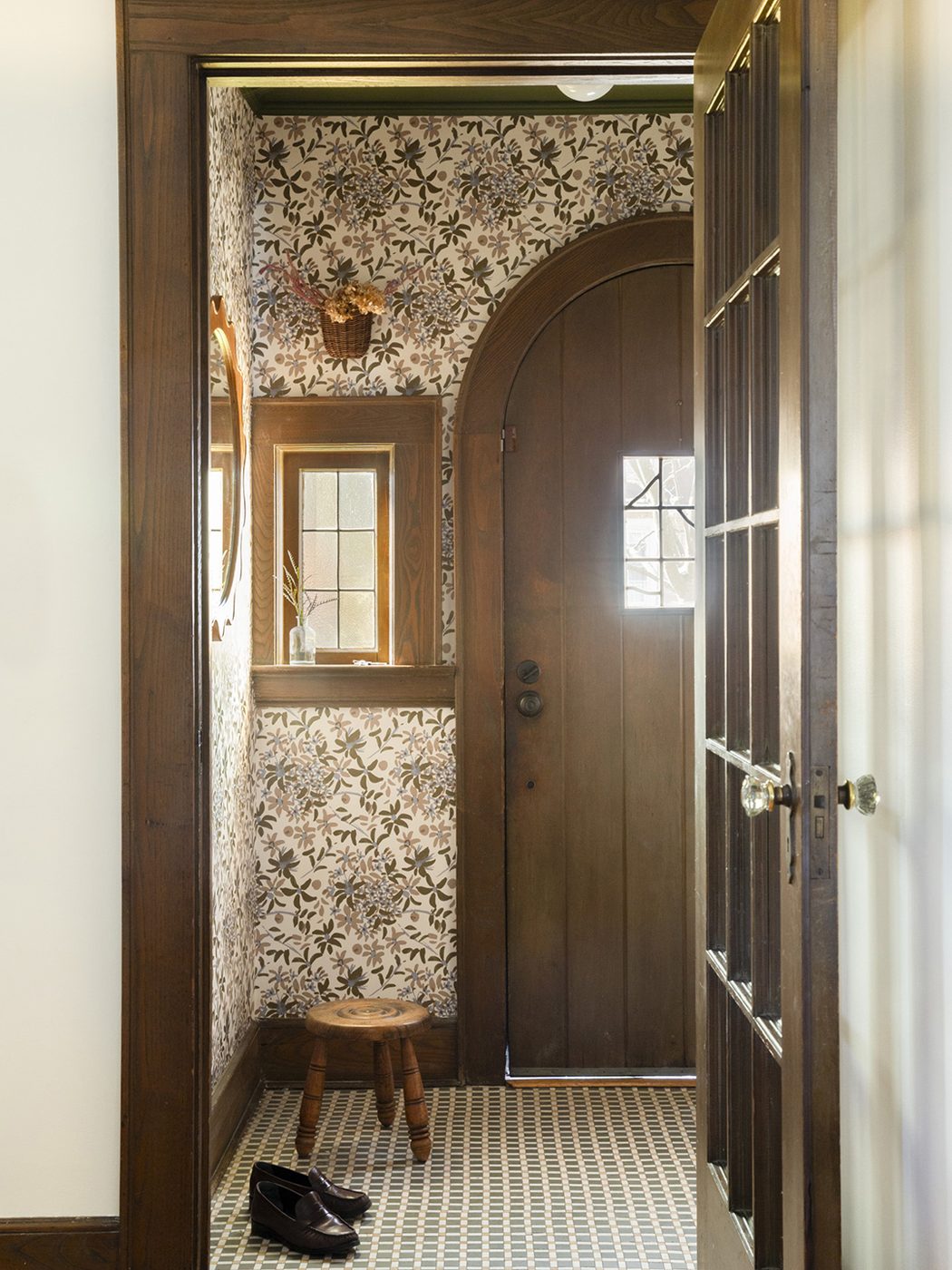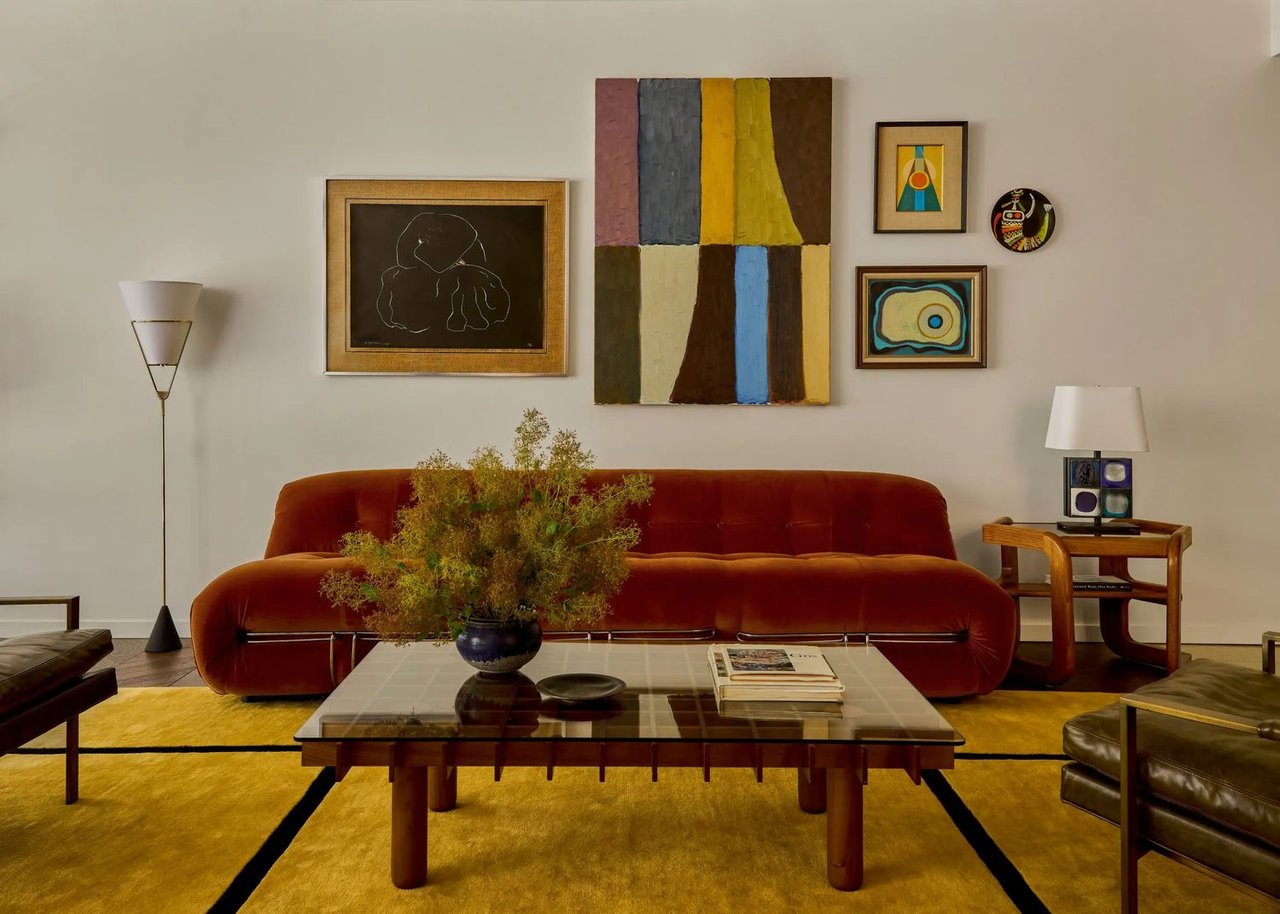
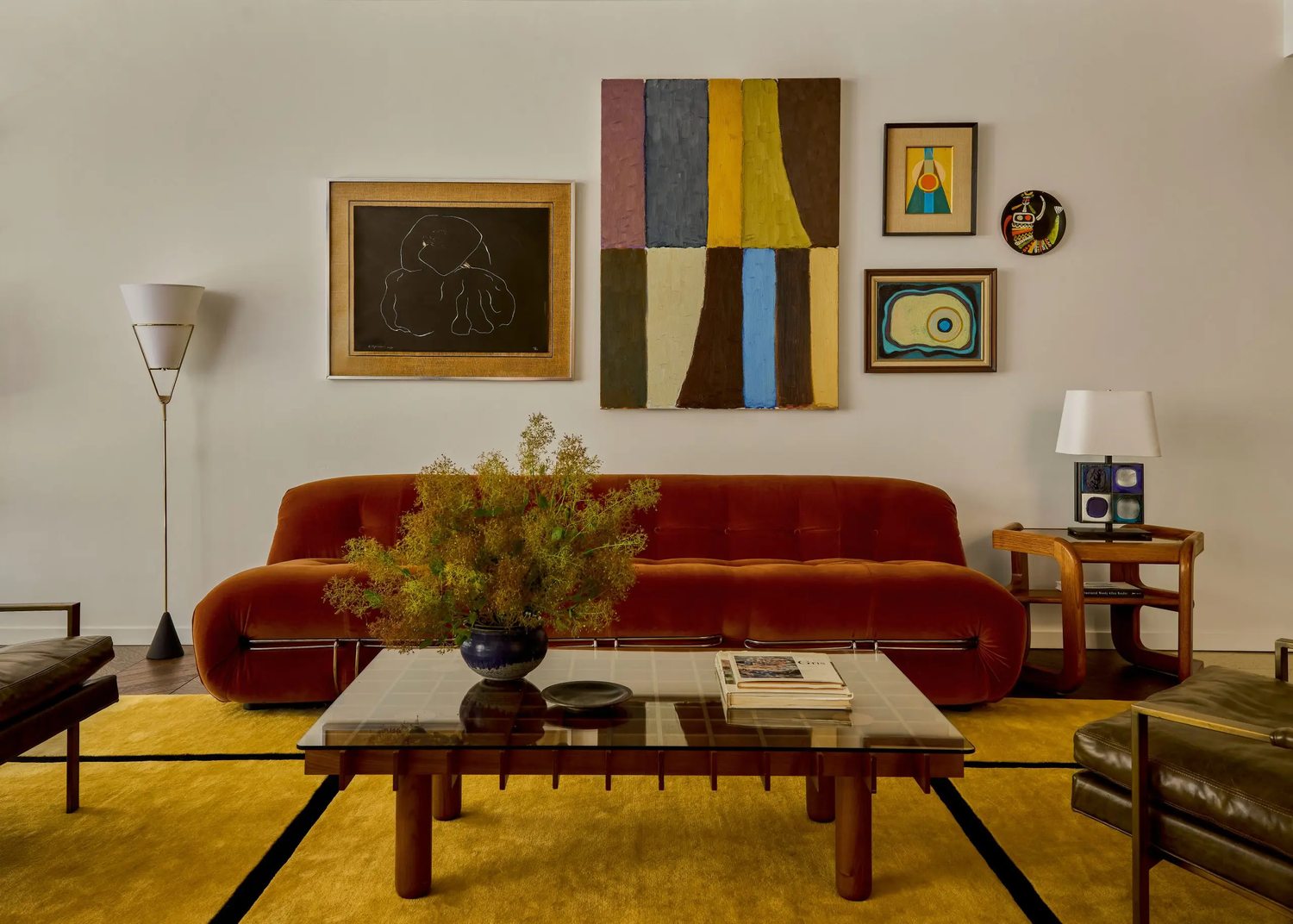
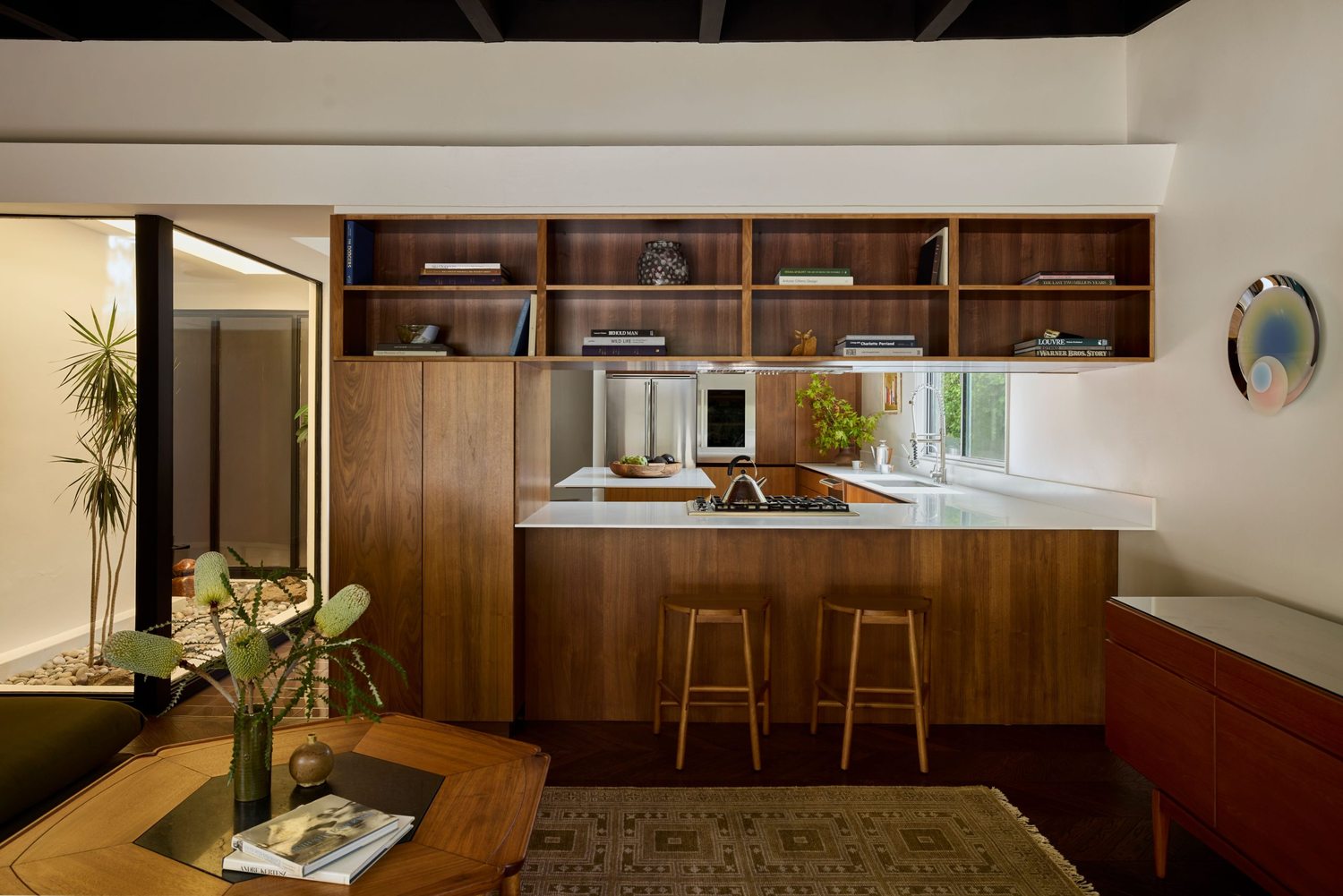
An Los Angeles couple, an executive film producer and talent manager, and a television writer, recently renovated a house together as they entered a new chapter, working with designer Coco Greenblum. What makes the project worth studying is not the transformation itself. It is the restraint: the majority of the home's furnishings are antiques, mid-century pieces collected rather than purchased new, and the house reads as considered rather than staged because of it.
The difference between a period house and a period recreation
Greenblum's approach threads a needle that trips up a lot of midcentury renovations. Furnish a 1960s house entirely with contemporary pieces and the architecture starts to feel like a backdrop for something it was not built for. Furnish it entirely as a museum piece, everything correct to the decade, nothing later, and it can start to feel like a stage set instead of a home someone actually lives in.
The project avoids both. Historic mid-century color and material references are present throughout, but reinterpreted through a contemporary lens rather than reproduced exactly. Multiple hues appear in the same room without the space feeling busy, because the palette is handled with restraint rather than variety for its own sake. The result reads as current while staying visibly connected to the house's original period.
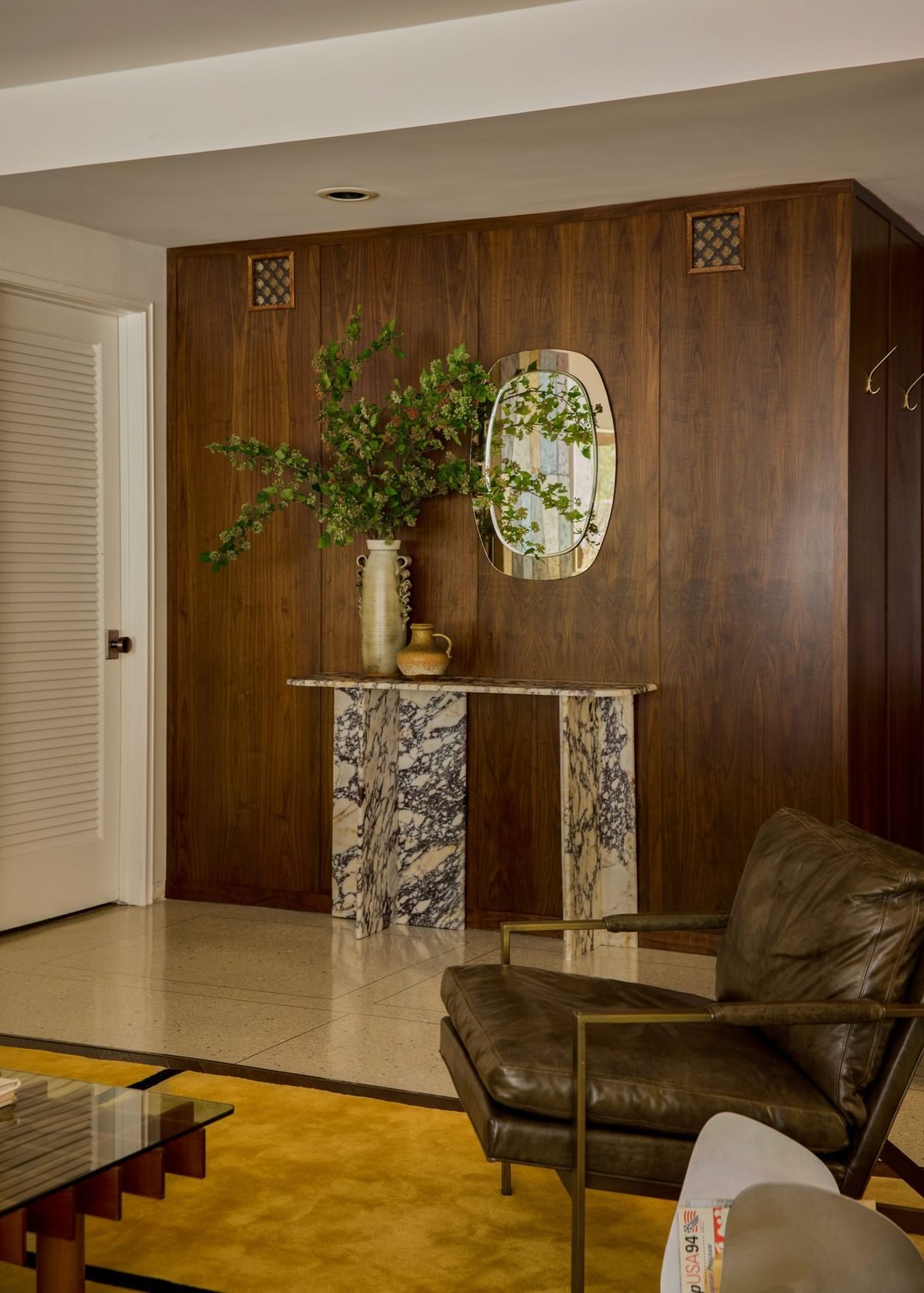
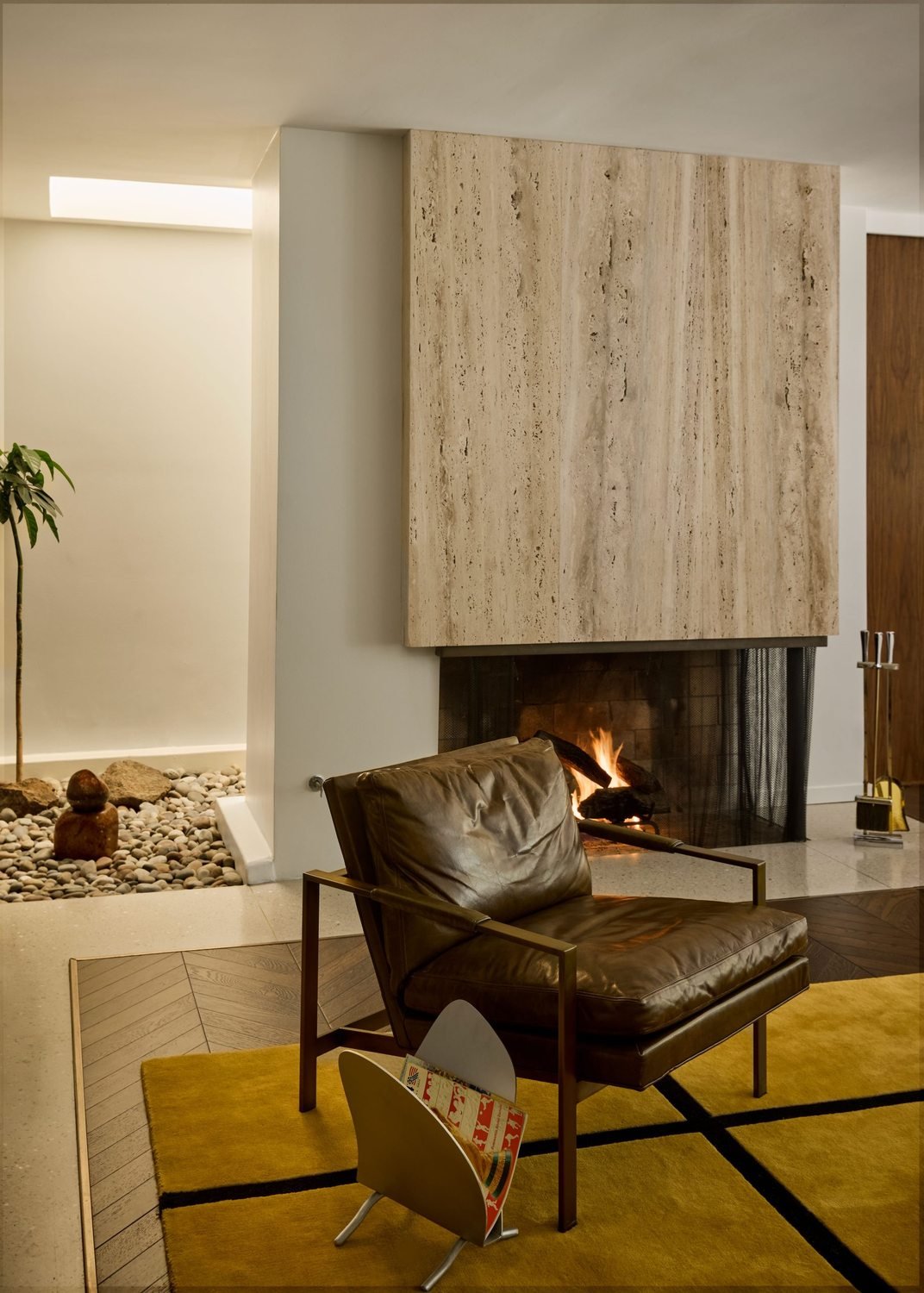
Antiques as the foundation, not the accent
The detail worth sitting with: antiques make up the majority of the home's furnishings, not a single vintage credenza dropped into an otherwise new room, which is the more common approach. That is a genuinely different way of furnishing a house, closer to how someone would actually accumulate belongings over a life than how a showroom stages a listing.
It is also, practically, a strong strategy for anyone furnishing an OC post-and-beam or midcentury property. The market for well-made midcentury furniture, Danish teak, California case goods, original Eames and Nelson pieces and their well-made contemporaries, has never been more accessible, between estate sales, specialist dealers, and a healthy secondary market. A house furnished this way does not fight its own architecture the way a house full of contemporary big-box furniture in a 1962 post-and-beam frequently does.
The idea worth taking from this. A renovation budget spent on a smaller number of well-chosen antique or vintage pieces, rather than an entirely new furniture package, often produces a more convincing, more sellable midcentury interior than an all-new approach at a comparable price point. It is also a genuinely different story to tell a buyer than "everything is new."
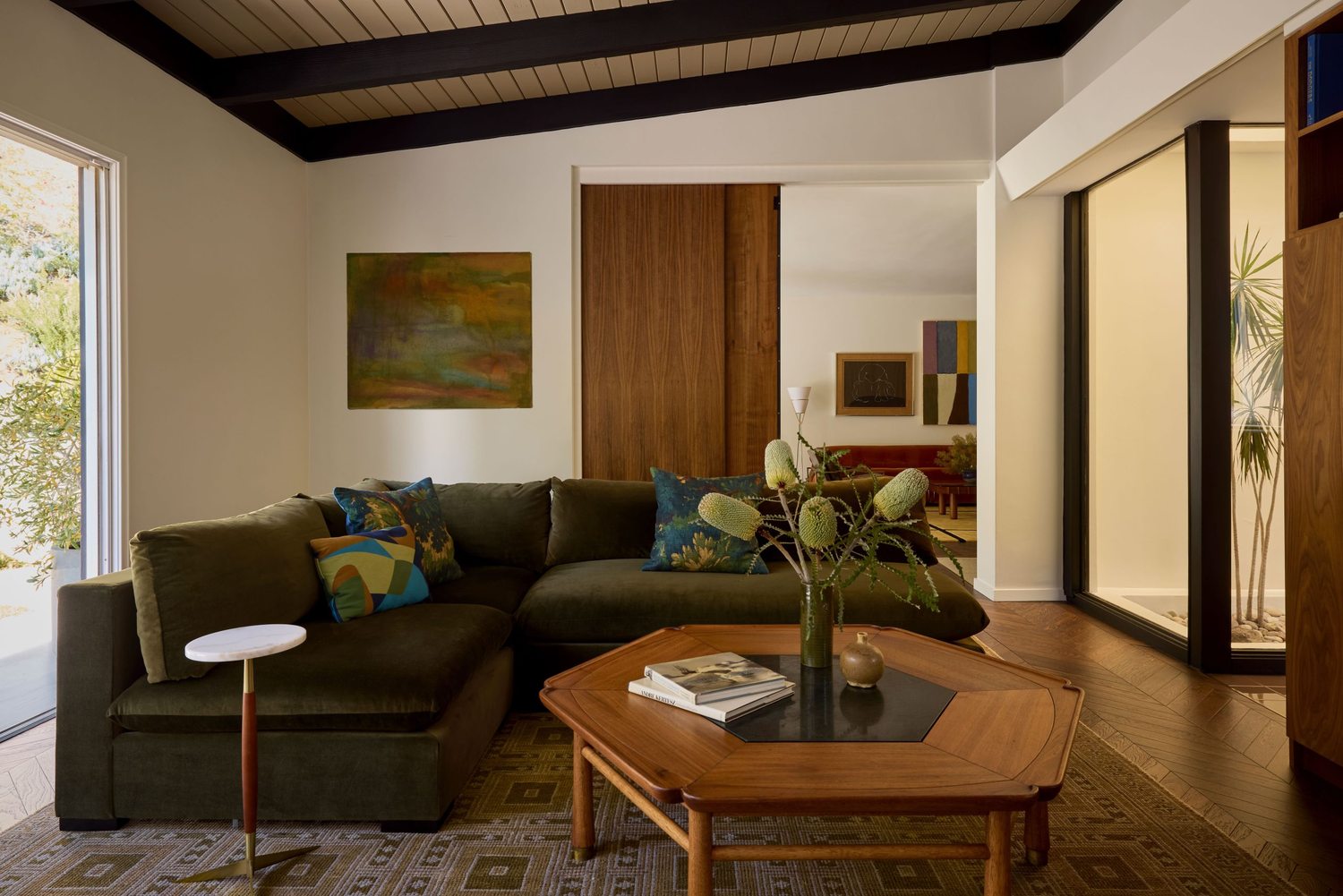
Homes evolve with the people in them
The renovation's underlying idea is broader than furniture: that a house should be able to change alongside the life being lived in it, without a full architectural transformation every time. For owners of significant midcentury properties in Orange County, many of them 60 years old and counting, that is a more useful frame than "restore it exactly" or "modernize it completely." The house does not need to be frozen or overhauled. It needs to be furnished, thoughtfully, by whoever is living in it now.
Sources and credits
Project details, designer commentary and photography originally published by Mid-Century Home, in "An LA Home Filled With Mid-Century Character," design by Coco Greenblum, photography by Tina Michelle Photography. Read the original feature and see the full photography at Mid-Century Home.